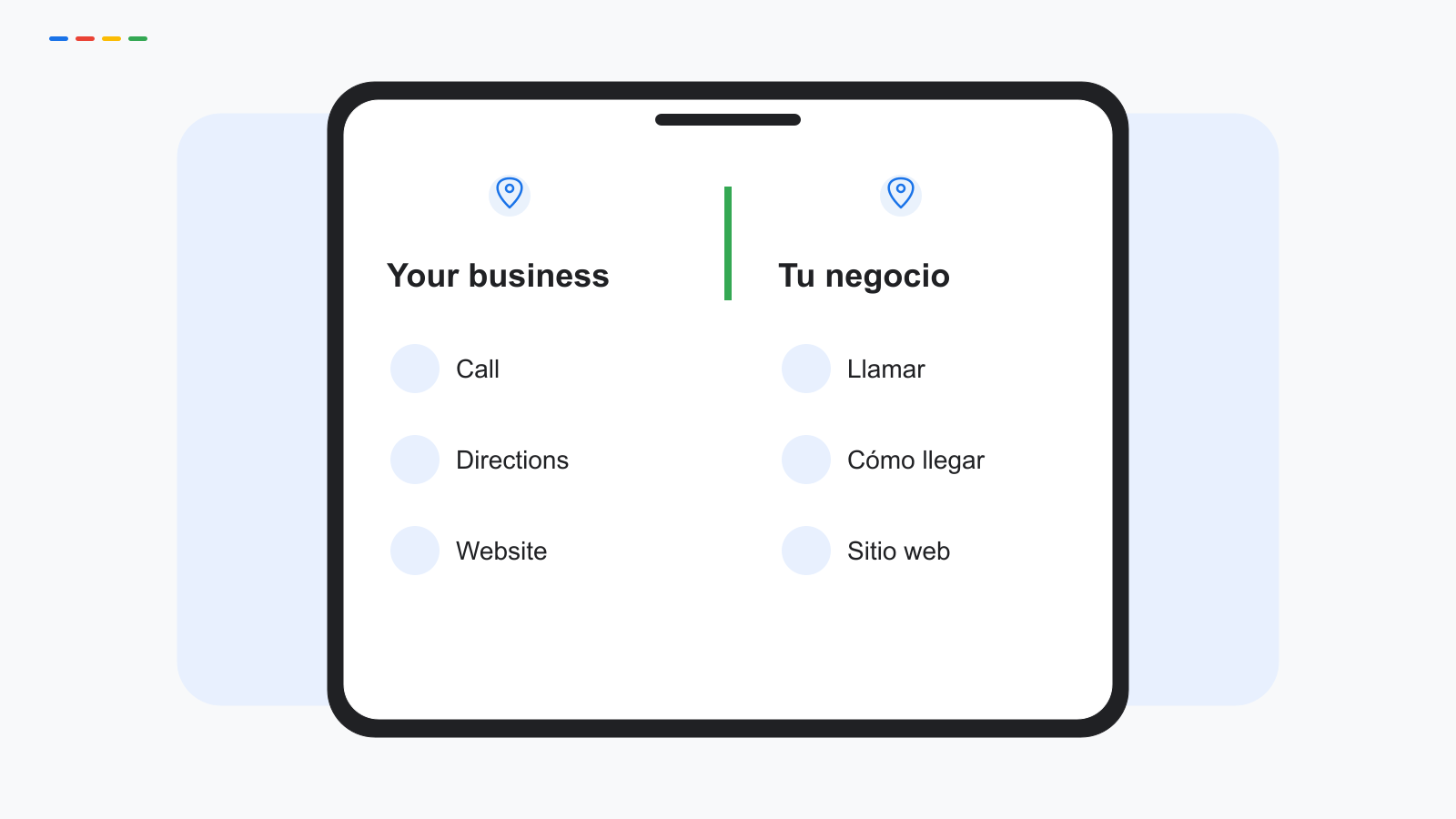
Local SEO for dentists should help people understand where your practice is, what it offers and how to contact it, while protecting private information. For a Miami dental office, start with an accurate location profile, a clear appointment path and service pages your clinical team has reviewed. Then check English and Spanish information together. Treat public review replies as a privacy-sensitive task, not a routine place to discuss treatment or defend the office with patient records.
The useful question is whether a person can make an informed next step. A larger pile of pages and keywords does not answer it by itself.
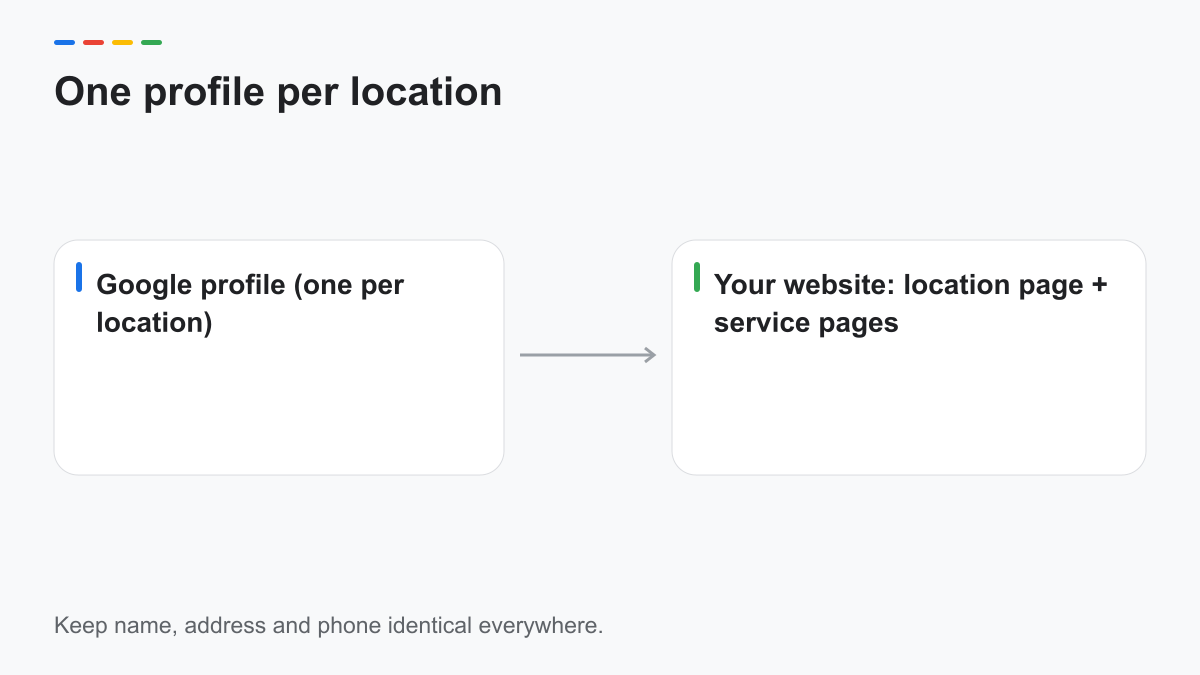
One profile per location, one clear primary category
For the practice, plan around each genuine eligible location. Use the office's real identity and a primary category that describes its main activity. Do not create an additional practice listing for every service you offer.
There is an important qualification: Google's guidelines separately address individual practitioners. Eligible dentists may have practitioner profiles, and the rules differ for a sole practitioner and several public-facing practitioners at one location. Read that section before changing an existing arrangement. The title of this section refers to the practice's location structure; it does not erase those exceptions.
Create an inventory before making edits. Include the practice profile, any dentist profiles, the address, the public phone and the linked page. Flag profiles that describe the same operation under slightly different names. Resolve ownership and eligibility questions before deleting or merging anything.
Ask the practice manager to approve this inventory. A listing may have an established purpose that is not obvious from its name alone. Record the decision and keep it with the office's marketing procedures so the next employee does not repeat the investigation.
Services and specialties: what to list and what to leave out
Start with services the office actually provides at that location. Use plain names and explain who handles the first inquiry. Separate a consultation from a treatment if they are different steps, and avoid wording that implies everyone qualifies for the same care.
Have a dentist review specialty descriptions and credentials. A marketing editor should not decide that a general practice can describe itself as a specialist. If a service is referred elsewhere, explain the referral process rather than listing it as an in-office service.
The services editor documented by Google supports service information, but available choices depend on the business. Check your actual editor and keep the website consistent. A service description should clarify the offering; it should not repeat Miami and dentist in every sentence.
For broader clinic website planning, use our guide to local SEO for clinics and doctors. Dental pages need their own clinical review, even when the general site structure is similar.
Replying to reviews without confirming a patient relationship
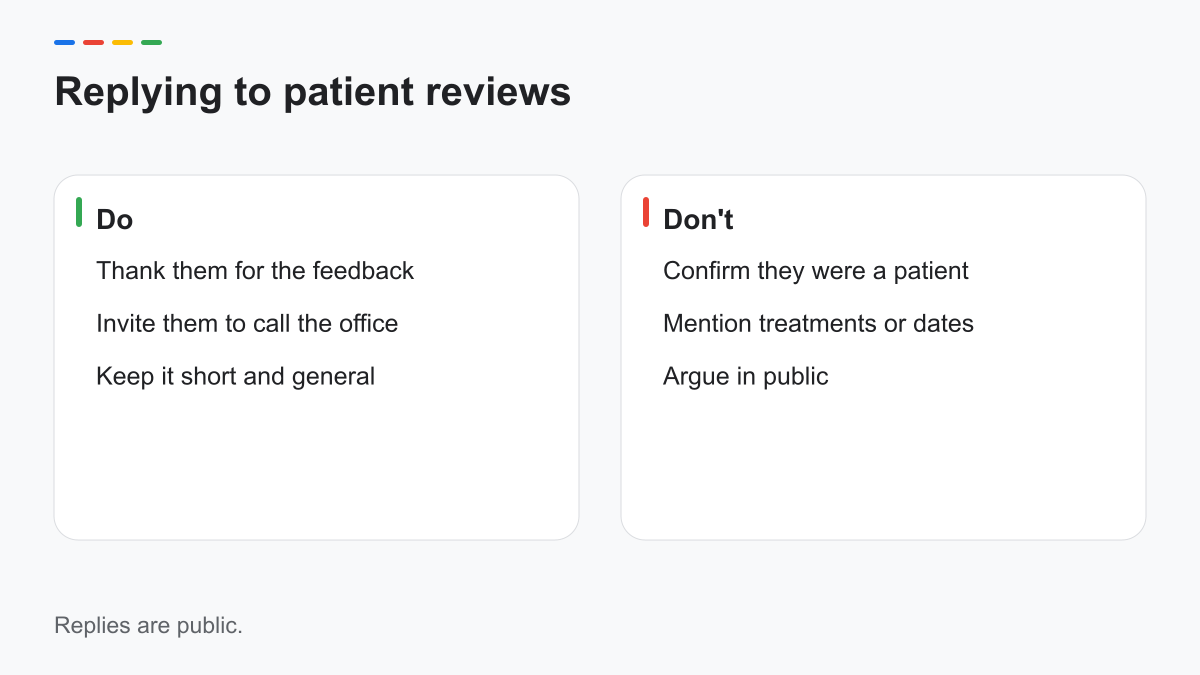
Decide who may draft replies and who approves them. Give that person a short escalation rule: when a review includes treatment details, an accusation or a question about records, stop the standard template process and refer it to the privacy lead.
HHS's Elite Dental resolution documents disclosures made in responses to online reviews. That primary source is a reason to take the task seriously, not a substitute for a professional assessment of your own obligations. Do not assume a reviewer's public statements authorize the office to add details.
Example — general reply for privacy review
Thank you for sharing your feedback. Please contact our office at [phone] if you would like to discuss a concern privately.
Example — Spanish version for privacy review
Gracias por compartir su opinión. Si desea hablar de alguna inquietud en privado, comuníquese con nuestra oficina al [teléfono].
Reply / don't reply — editorial examples
- Use for professional review: A general acknowledgement and an invitation to contact the office.
- Do not publish: A sentence confirming a patient relationship, a treatment, an appointment date or a fact taken from records.
- Do not publish: An argument about whether the reviewer followed clinical instructions.
These examples are not preapproved HIPAA templates. A professional competent in medical privacy must review the wording and workflow before publication or use.
If the office wants more examples, start with our review response examples, then apply the stricter healthcare review. A generic restaurant or retail reply should not be copied into a dental account just because it sounds friendly.
Bilingual patient searches
Example search phrases include dentist near me and dentista cerca de mí. They illustrate two ways a person might express the same task; they are not measured search-volume findings for your practice.
Build language support around the whole journey. If the website says calls are answered in Spanish, the front desk should know which team members can help and when. If a Spanish page links to an English-only booking form, tell the visitor what to expect rather than hiding the mismatch.
Translate practical details first: the location, parking instructions, contact options, appointment requests and the services available. Then review terminology with a fluent speaker who understands the clinical context. Literal translation can make a routine instruction confusing or overstate a treatment claim.
Do not infer a person's language from their name or appearance. Offer a choice and let them use it. The same principle applies to callbacks: record a voluntarily stated preference in the office's approved system instead of publishing it in a reply.
Location and service pages on your site
A location page should answer the arrival questions: which office is this, where is the entrance, how can someone contact it, and what happens after requesting an appointment? Use actual office photos with approved permissions. Explain accessibility features accurately rather than applying a broad label without checking.
A service page should answer a different question. Explain what the service is, what a consultation assesses and what the reader should ask the clinical team. Keep diagnosis and individual suitability out of the marketing page. Have a qualified clinician review treatment descriptions and any claims about benefits or risks.
Avoid turning each service into many near-identical neighborhood pages. If Doral and Hialeah visitors attend the same office, a clear location page may help more than duplicate copy with swapped place names. Google's spam policies are relevant when reviewing doorway-style expansion.
Link the practice profile to the page that best represents that specific location. Then link from that page to the relevant services and appointment instructions. Our Miami clinics page provides context for coordinated local work: our Miami clinics page.
Insurance and appointment information that must stay consistent
Put one staff member in charge of insurance and appointment wording. State only the coverage information the office has confirmed. Distinguish accepting a plan from promising that a particular service is covered, and direct individual coverage questions to the appropriate private process.
Check the phone, main hours and booking destination in the profile, location page and appointment page. A changed scheduling system can leave an old link active long after the new form is working.
Test an appointment request without submitting real patient information. Check the confirmation message and make sure it distinguishes a request from a confirmed appointment. If a form fails, provide an alternative contact route that staff can monitor.
Keep unnecessary medical details out of ordinary marketing contact forms. The office's privacy and security advisers should determine which system receives sensitive information. A convenient messaging button is not by itself evidence that a channel is suitable for that information.
What to measure each month
Review the available Business Profile performance measures with the office's own operational records. Google's documentation defines calls as clicks on the call button; that is not a count of answered calls or booked appointments. Direction requests and website clicks also describe actions rather than completed visits.
Use those differences when writing your monthly note. If website clicks rise but appointment requests do not, inspect the landing page and booking flow before declaring success. If call-button clicks rise while the front desk misses calls, the next task may be staffing or routing.
Compare similar periods and record schedule changes, closures or service updates that may explain a difference. Avoid interpreting one unusual week as a permanent trend. Give each observation a next action and an owner.
Suggested monthly review:
- Confirm profile and practitioner structure.
- Review public hours, phone and appointment links.
- Check insurance and service wording with staff.
- Send sensitive reviews to the privacy lead.
- Compare available interaction data with appointment records.
- Assign the most important correction before the next check.
For local coordination across website and profile tasks, see our Miami local SEO page.
Frequently asked questions
Can I thank a patient by name in a reply?
Do not treat a displayed reviewer name as permission to confirm a patient relationship. Have your medical privacy adviser approve the practice's reply policy and use general wording until that review is complete.
Do I need a separate profile for each office?
Each genuine eligible practice location should be assessed separately. Google's individual-practitioner rules can also affect dentist listings, so check the actual arrangement before creating or consolidating profiles.
Should my profile list Spanish-speaking staff?
Explain Spanish-language support only when the office can provide it. Check the available profile fields and make sure website and front-desk instructions reflect the same service.
Sources
- Google — Business representation, including practitioners: support.google.com/business/answer/3038177
- Google — Manage services: support.google.com/business/answer/9455399
- Google — Manage reviews: support.google.com/business/answer/3474050
- Google — Profile performance: support.google.com/business/answer/9918094
- Google Maps — Content policy: support.google.com/contributionpolicy/answer/7400114
- Google Search Central — Spam policies: developers.google.com/search/docs/essentials/spam-policies
- HHS — Elite Dental resolution agreement, 2019: hhs.gov/sites/default/files/elite-dental-ra-cap.pdf
- HHS — HIPAA for professionals: hhs.gov/hipaa/for-professionals/index.html
Source research checked October 12, 2026. HHS case is historical evidence, not current individualized advice.
Want a second look at your profile?
We review public profile accuracy, location pages and contact friction, then respond in one business day. Send only the public Google Maps link; no account access or patient information is needed. Our bilingual team delivers the work remotely.
Request free audit →